
How long does it take an electric car to recharge?
From battery capacity to the power delivered by the charging infrastructure, there are several factors that determine how quickly an electric car's range can be restored. Getting an overview of how electric car charging works allows you to plan both day-to-day management at home and long-distance travel, optimising costs and waiting times.
How to calculate the charging time for an electric car
There are several factors that contribute to determining the charging time of an EV. The first is the type of current used: charging an electric car at home, for example, is done using alternating current (AC), allowing the car to recharge during prolonged stops.
Alternating current (AC) charging stations are also used in workplaces and public settings, where stopping times are generally longer. Alternatively, direct current (DC) charging stations for electric cars, feed power directly to the vehicle's battery and are used for fast and high-power charging.
The other factors that determine the duration of the process are the State of Charge (SoC) and battery capacity of the electric car, the maximum power accepted by the vehicle, and the battery temperature. Furthermore, in AC charging, the power is also limited by the characteristics of the onboard charger.
To make a rough calculation of the car's charging time, divide the energy needed to replenish the battery by the actual charging power. This, however, is a theoretical estimate: the actual time can vary depending on conversion losses, battery conditions, and, especially in DC charging, the vehicle's charging curve.
When the power output from the charging station and the input accepted by the vehicle do not match, the maximum power actually available for charging is the lower value of the two. For example, if the vehicle accepts up to 350 kW but the station can supply a maximum of 100 kW, charging will take place at a power not exceeding 100 kW.
How many kW are needed to charge an electric car
The power required to charge an electric car depends on the place of charging, the power available in the system and that accepted by the vehicle.
In a domestic setting, the power available for charging is a key factor: an electric car can be charged on a 3 kW supply, but the power simultaneously absorbed by other domestic loads must be taken into account. To have more power available, it may be necessary to increase the contractual power, for example to 4.5 or 6 kW, or adopt dynamic load management systems. In public settings, however, charging power varies significantly depending on the type of station:
- charging an electric car at home with a 3 kW supply is possible, provided there is sufficient power for charging and active domestic loads;
- with a 4.5 or 6 kW supply, a Wallbox can manage the power allocated for charging based on the availability of the system;
- AC charging stations are available with different power levels, including 7.4 kW, 11 kW and 22 kW, depending on the configuration of the station and the system;
- DC charging stations permit fast and high-power charging, with values that can range from 30 kW to over 180 kW. However, actual times depend on the station’s power output, the power accepted by the vehicle, and the relative charging curve.
Charging times based on the device used
The solutions available on the market to recharge an electric car offer different power outputs and, consequently, variable charging times, depending on the technology used, the vehicle’s characteristics, and the battery capacity.
Domestic Schuko socket
Charging an electric car at home can also be done via a Schuko socket, using a suitable portable charging device. The actual power and time required depend on the characteristics of the system, the device used, and the amount of energy needed to replenish the battery. However, for regular and prolonged use, it is better to use a dedicated charging system, appropriately sized and equipped with the necessary safety features.
Domestic AC Wallbox (slow charging)
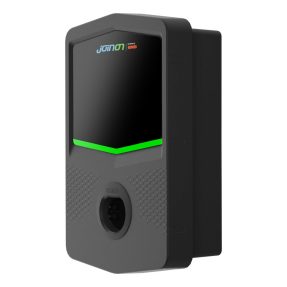
The charging time for an electric car at home via a Wallbox depends on the power available in the system, the power delivered by the station, and the power accepted by the vehicle. Compared to a domestic socket, a wallbox generally enables charging at higher power levels and can incorporate smart features to manage and adjust the power allocated for charging based on other energy consumption, while also optimising self-consumption where a photovoltaic system is present.
Public AC charging stations (fast charging)
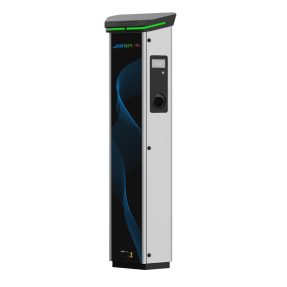
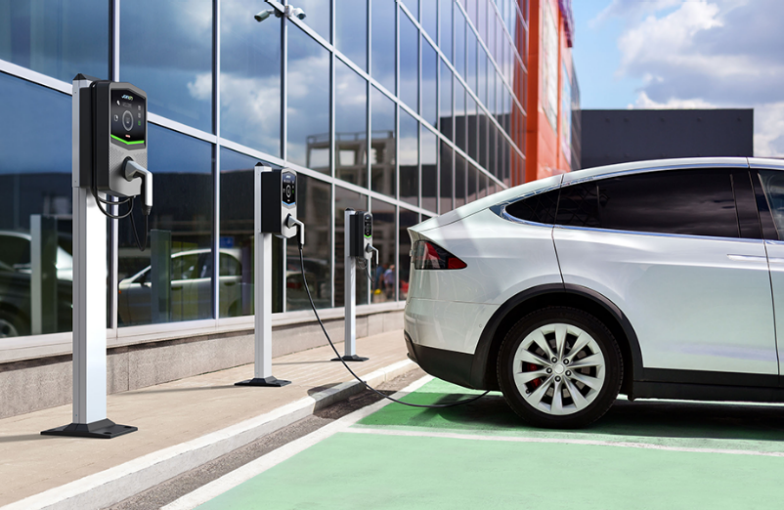
The installation of public access charging stations enables vehicle recharging while parked at car parks, supermarkets, shopping centres, or other urban contexts. Alternating current (AC) stations can operate at a variety of power levels, and actual charging times will depend on the maximum power accepted by the vehicle's onboard charger.
DC charging stations (ultra-fast charging)
Stations providing direct current (DC) are used for fast and high-power charging of electric vehicles and offer shorter wait times compared to AC charging. The actual performance depends on the power that can be delivered by the station, the power accepted by the vehicle, the state of charge, and the battery conditions. At high charge levels, the power output is gradually reduced in accordance with the vehicle’s charging curve.
What can slow down charging for an electric car?
Several factors related to the infrastructure and the vehicle affect the charging times of the electric car. The available power may be limited by the characteristics of the electrical system, by the energy consumption of other loads or by the presence of multiple vehicles charging simultaneously.
In alternating current (AC), the actual charging power is determined by the power available from the station and the maximum power accepted by the vehicle's on-board charger. Instead, with direct current (DC) it depends on the power output from the station and that accepted by the vehicle, as well as the battery conditions and the relative charging curve.
The charging time of an electric car also varies due to the condition of the battery and environment:
- the state of charge can affect the charging power: especially with direct current, this generally tends to decrease gradually as the state of charge increases, depending on the vehicle's specific charging curve;
- particularly low or high temperatures can cause the battery management system to limit the charging power to keep it within the correct operating range and preserve its performance and lifespan.
Compliance with the regulations for electric car charging stations ultimately helps to ensure high safety standards and correct installation of the system.
How to optimise charging times
There are several measures that can be adopted to optimise electric car charging times:
- install a dedicated wallbox instead of charging via a domestic socket;
- use high-power direct current charging when a faster charge is necessary, for example during road trips;
- manage the battery charge level, taking into account the indications provided by the vehicle manufacturer, especially during daily use;
- schedule the charging cycle during the most convenient time slots, as defined by your supply contract;
- integrate charging into a smart system capable of dynamically managing the available power and, where applicable, optimising the self-consumption of energy produced by a photovoltaic system.
FAQ
The time varies depending on the available power and the power accepted by the vehicle. For a 60 kWh battery: it takes about 20 hours at 3 kW, about 8.5 hours at 7.4 kW, and about 3 hours with a 22 kW AC charging station. With a high-power DC charging station, charging times can be significantly reduced, but they also depend on the battery’s initial state of charge and the vehicle's charging curve.
During direct current charging, the power generally tends to decrease as the battery's state of charge increases. The Battery Management System (BMS) handles the charging process based on the battery’s state and temperature in accordance with the characteristics specified by the manufacturer. The 80% figure is therefore a rough guide and not a fixed threshold applicable to all vehicles.
The cost of charging an electric car depends on the amount of energy replenished and the tariff applied. In the home, it can vary based on the electricity supply contract, and whether there is any self-produced energy available, for example, from a photovoltaic system. At public charging stations, however, the cost varies based on the operator, the type of charging, and the chosen tariff plan.

Trending Topics
Related articles



Show other categories


You can enter the Gewiss world by consulting the sites available for each country, differentiated by language, services, and catalogue offerings
Choose your country


Check your country
You are browsing the International site but it seems that you are in {{country}}. Do you want to update your country?

Yes, go to the website for {{country}}

No, stay on the International site