
Laboratory tests on IEC 309 plugs and sockets: how they work
The reliability and quality of the connections made through IEC 309 plugs and sockets are vital for the safety and efficiency of industrial electrical systems. Testing and rigorous performance checks help prevent service interruptions and associated costs, protecting the reliability of machinery and the safety of operators in the most complex operational contexts.
Why checks on industrial plugs and sockets are essential
In industrial electrical systems, IEC 309 plugs and sockets operate continually within harsh environments, where they are subjected to stress caused by dust, moisture, impacts, and vibrations.
In particular, the continuous vibrations, typical of industrial machinery, can cause the progressive loosening of connections with traditional screw terminals. The resulting reduction in contact pressure may increase electrical resistance and result in overheating. In more critical cases, an unstable contact can even give rise to the formation of electrical arcs and overheating, causing failures, tripping of protective devices and unscheduled equipment downtime.
To ensure maximum safety in the wiring of plugs and sockets, device reliability cannot simply be claimed, but must be demonstrated through rigorous technical checks.
Laboratory tests: certifying reliability and compliance with the IEC 309 standard
The international standard IEC 60309 defines the dimensional compatibility requirements for plugs, wall sockets, couplers, and panel-mounted plugs used in industrial applications (including IEC 309 interlocked socket-outlets and plugs).
To verify that each component maintains its insulation properties and mechanical stability intact, regular laboratory tests on the materials are carried out according to the provisions of the standard.
Simulation of real conditions of use
The IEC 60309 standard specifies the tests that industrial plugs and socket-outlets must undergo for an operating temperature range of -25°C to + 40°C. To simulate real conditions of use, the plugs and socket-outlets are also subjected to thermal shock test cycles and to high levels of relative humidity to replicate the impact of atmospheric agents.
Specific tests recreate conditions of direct exposure to fine dust and high-pressure water jets, to validate the IP protection ratings claimed by the manufacturer.
Measurement of electrical and mechanical performance
Through functional tests – passing electric current through the pins and sockets of the plugs – it is possible to verify the temperature rise of the contacts under prolonged nominal load, the maximum permitted limit of which is set at 50 K.
In terms of mechanical integrity, the device must withstand thousands of insertion and extraction cycles without sustaining structural deformations.
To ensure that the casing maintains its integrity, impact tests are carried out using the pendulum test - which simulates crushing caused by foot traffic - and a mechanical vibration test.
Verification of material durability over time
Plastic polymers and rubber gaskets are subjected to accelerated aging tests, to determine premature degradation of the insulating components. As part of its analysis of the plastic materials, the laboratory also carries out the UV resistance test, simulating the effect of direct sunlight exposure.
To protect the plastic material from phenomena such as breakage, yellowing, or loss of mechanical rigidity, specific HALS additives are added to the technopolymer intended for IEC 309 standard compliant industrial sockets and electric panels.
High-temperature resistant plastic materials are tested using the glow wire test (Glow Wire Test at 650°C or 850°C), which certifies the properties of the casing. While metallic components are finally verified for corrosion resistance via the salt spray test and exposure to chemical substances.
The main tests on IEC 60309 sockets and plugs
In summary, the validation of industrial components includes:
- evaluation of the mechanical resistance of the casings
- verification of deterioration of products made from UV-resistant plastic;
- impact tests and resistance to stresses;
- performance of durability tests through repeated insertion and extraction cycles to verify the wear of contacts and mechanisms;
- analysis of temperature through the measurement of the temperature rise during operation;
- verification of the quality of electrical contacts;
- environmental sealing tests with specific IP ratings for resistance to water and dust, tested under harsh conditions.
Beyond compliance: the value of testing for the customer
Laboratory tests offer tangible advantages to both installers and end users. Tests enable the verification of the electrical, mechanical, and environmental performance of products under defined and controlled conditions, contributing to the safety and reliability of the system.
Choosing products whose performance is validated through tests compliant with applicable standards means being able to rely on solutions designed to maintain the required safety and functionality over time, even under harsh operating conditions.
This validation process helps to reduce the risk of unexpected failures and interruptions, potentially limiting the need for corrective interventions and premature replacements.
GEWISS's commitment to performance validation
Safety is the cornerstone of every GEWISS solution and is achieved through rigorous checks on finished products, carried out by a certified internal laboratory, to ensure full compliance with all the requirements set out in the IEC 60309 standard.
The highly automated production lines and ongoing research into reliability, quality, and safety allow us to offer the industrial sector components capable of ensuring precise, safe, and efficient management of the electrical power supply for every area of the system.
FAQ
The resistance of insulating materials is verified by subjecting the plastics to accelerated thermal aging tests in an oven and continuous exposure to UV rays. In addition to these tests, the Glow Wire Test is carried out, which determines the material's ability to prevent flame propagation and to self-extinguish in the event of abnormal overheating.
In the laboratory, resistance to mechanical impact (IK rating) is verified via pendulum impact and crushing tests; the IP protection ratings for the resistance to penetration by fine dust and water are evaluated; for electrical performance, the overtemperature limit of contacts under nominal load is verified.
Corrosion prevention is achieved through the use of nickel-plating treatments on metal contacts and the use of technopolymers with HALS additives. Metal components are also tested in a salt spray chamber to certify their ability to withstand chemical agents and oxidation in aggressive or marine environments.
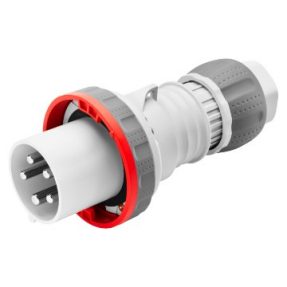
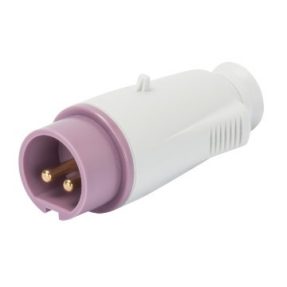
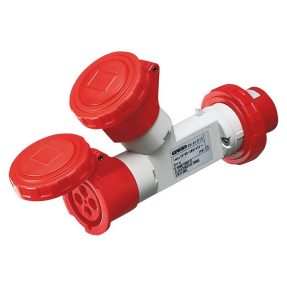
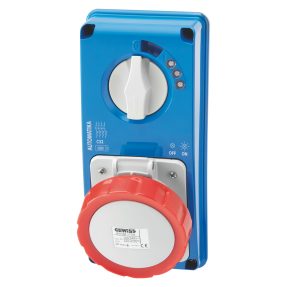
Discover the Related Ranges
Trending Topics
Related articles






Show other categories


You can enter the Gewiss world by consulting the sites available for each country, differentiated by language, services, and catalogue offerings
Choose your country


Check your country
You are browsing the International site but it seems that you are in {{country}}. Do you want to update your country?

Yes, go to the website for {{country}}

No, stay on the International site