
IEC 309 plug and socket wiring: the heart of industrial safety
Uninterrupted operation of industrial plants depends on the reliability of electrical power connections. Using power distribution solutions equipped with safe and reliable wiring systems helps to reduce the risk of unexpected failures and consequent service interruptions.
The importance of wiring for uninterrupted operation
A properly installed electrical infrastructure helps minimise unscheduled machine downtime, protecting both the integrity of the machinery and the overall safety of workers within the production site.
A properly executed wiring and the use of plugs and sockets compliant with the IEC 60309 series help to:
- contain operating costs, reducing the risk of failures attributable to incorrectly executed connections and, consequently, the need for emergency intervention and unscheduled service interruptions;
- improve the safety and reliability of electrical connections, limiting the risk of overheating, electrical arcs, and failures that could compromise equipment or expose operators to electrical hazards.
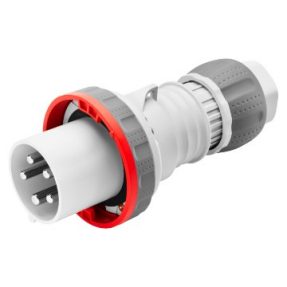
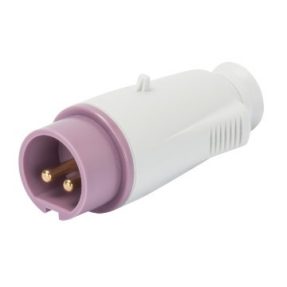
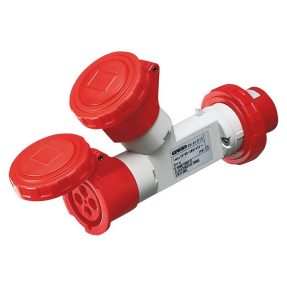
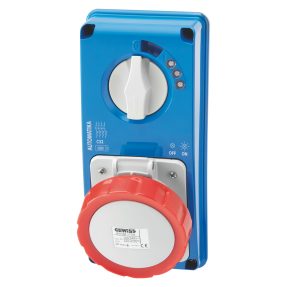
The IEC 309 industrial plugs and sockets from GEWISS meet these requirements by combining ease of assembly with high degrees of protection and mechanical resistance.
The range includes mobile plugs and sockets, as well as flush-mounted and wall-surface solutions with rated currents from 16A to 125A for construction site electrical systems and other applications such as data centres, industry, temporary installations, and harsh production environments.
Hazards associated with an inadequate connection: vibrations and overheating
Where there is industrial machinery, the continuous vibrations can cause connections with traditional screw terminals to gradually loosen. The resulting reduction in contact pressure may increase electrical resistance and result in overheating. In more critical cases, an unstable contact can even give rise to the formation of electrical arcs, causing failures, tripping of protective devices and unscheduled equipment downtime.
Vibrations can therefore loosen the connection and reduce the effective contact area, increasing electrical resistance and generating localised overheating that accelerates the deterioration of the connection.
In GEWISS IEC 309 HP industrial plugs and socket-outlets, the 16 A and 32 A versions are available with screw wiring or with quick-spring connection, while the 63 A and 125 A versions adopt indirect clamping mantle terminals. These solutions help keep the connection stable and reliable even when subjected to mechanical stress and vibrations.
Dirt, oxidation, and corrosion can also compromise the reliability of the connections. For this reason, the entire IEC 309 range adopts nickel-plated contacts as standard, which offer protection against corrosion, oxidation, and abrasion even in harsh environments or where subjected to corrosive substances, such as in marine and port installations.
Various types of wiring
The efficiency of the wiring in an industrial plant relies on the type of clamping used, technical characteristics (verified and certified with laboratory tests on sockets and plugs) and on the features that make installation safer and faster.
The ergonomic grip design of the GEWISS IEC 309 sockets and plugs facilitates cabling operations, enabling the operator to maintain a firm grip on the main body of the device with one hand while working safely with the other.
To this end, the design of the 63A and 125A versions features rubberised surfaces to ensure optimal grip even when wearing work gloves or in damp conditions, as well as a rear ring nut that provides a solid support base for its opening and closing with tools.
The angle and vertical entry direction of the conductors are important elements for optimising cable routing and minimising bending stress. Furthermore, in the 16 A and 32 A versions the patented SAFE-LOCK quarter-turn closure simplifies assembly.
The plugs and sockets in the range boast an impact resistance rating of IK09 and the watertight solutions offer high levels of protection up to IP66/IP67/IP68/IP69 against the ingress of dust and liquids.
These are important considerations when it comes to wiring IEC 309 interlocked plugs and sockets that help to determine the selection of the most suitable interlocked socket.
Screw wiring
The traditional screw wiring uses mechanical terminals in which the conductor, stripped of its sheath, is positioned in the housing and locked by means of a clamping screw.
This solution offers a secure hold against the mechanical loosening of the terminals and for the low-resistance wiring of the electrical socket.
The GEWISS series offers screw solutions with ergonomic designs that allow rotation of the plug body with a single hand while using the screwdriver.
Quick spring wiring
Quick spring wiring occurs through the action of a small lever, without any need for tools. By opening the internal steel spring, positioning the conductor, and releasing the lever, the plate exerts constant and uniform pressure on the cable.
GEWISS spring-loaded wiring devices distribute the contact over the entire circumference of the conductor, halving installation times and reducing the risks of loosening linked to system vibrations.
Mantle wiring
High-current systems (from 63A to 125A) use an indirect clamping device.
Mantle wiring provides a large contact surface and uniform pressure to ensure a very stable connection, an essential requirement for very high amperages.
FAQ
Wiring that is not correctly installed or is inadequate for the application conditions can lead to the loosening of connections if subjected to vibration. The consequent reduction in effective contact area can increase electrical resistance and result in overheating. If not detected and corrected, this eventuality can lead to the deterioration of the connection, the formation of electric arcs, and, in the most severe cases, fire, equipment failure, or interruptions in the production process.
Screw wiring uses a screw that tightens the conductor directly or via an intermediate component and requires the use of a screwdriver and manual tightening to the torque indicated by the manufacturer. Rapid spring wiring, on the other hand, uses an elastic element actuated by a lever, which exerts continuous pressure on the conductor without requiring manual tightening of a screw. In GEWISS Quick Spring versions, this technology allows for connection times to be halved compared to traditional versions.
The even distribution of contact pressure around the conductor provides a stable electrical connection and a more uniform flow of current. This helps to minimise contact resistance and the resulting heating due to the Joule effect, reducing the risk of localised overheating and ensuring the connection’s long-term reliability.
Discover the Related Ranges
Trending Topics
Related articles






Show other categories


You can enter the Gewiss world by consulting the sites available for each country, differentiated by language, services, and catalogue offerings
Choose your country


Check your country
You are browsing the International site but it seems that you are in {{country}}. Do you want to update your country?

Yes, go to the website for {{country}}

No, stay on the International site