
Smart Home products and solutions: technical guide for their selection
A connected Smart Home system, based on the ZigBee protocol, offers a full range of solutions for smart homes and small commercial premises and is suitable for both new builds and renovations. The integration of smart components enables the management of comfort, consumption and security via a centralised and customisable user experience, coordinated by the Gewiss Home Gateway app and EGO Smart plates. The GEWISS Smart Home provides operational reliability even without an internet connection, ensuring that local automations remain active thanks to the robustness of the mesh network.
What is a smart electrical system, and how does it work?
A smart electrical system makes it easy to automate and monitor the functions of the home. Unlike a traditional system, Smart Home systems rely on connected devices, such as relays, switches and sockets, that communicate via radio with a central gateway using standards such as ZigBee or Wi-Fi.
These systems often have a distributed type of architecture: each device operates independently for local functions and exchanges data with the central hub, often called a gateway, for remote management and the creation of complex scenarios.
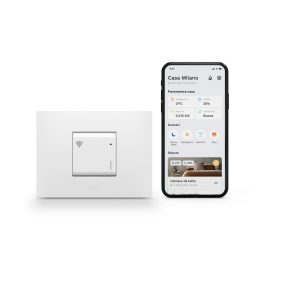
The Home Gateway, connected to the home Wi-Fi router, forms the bridge between commands sent via smartphone and installed devices. This allows the user to interact from both inside and outside the home, ensuring the execution of logic and scenarios even in the absence of an internet connection.
Thanks to the new smart modules, the evolution from a traditional system to a Smart Home system does not necessarily require invasive structural work. Flush-mounting devices can be housed in existing electrical boxes to make lights, shutters and electrical loads smart.
How to select Smart Home products: the technical criteria
A modern range of Smart Home solutions offers an extensive variety of solutions to meet every need. When choosing devices for a smart home, it is important to consider factors like reliability, responsiveness and independence from an internet connection for local control of the devices.
Key technical criteria include:
- choice of communication protocol: the ZigBee standard (used, for example, in the Gewiss ChoruSmart system ) is an energy-efficient mesh protocol, ideal for smart home sensors and many other devices. Wi-Fi is suited to high-data-flow devices, such as cameras;
- openness to third-party systems, such as the Amazon Alexa or Google Home voice assistant, ecosystems which allow the user to control all functions easily and intuitively;
- a single app (such as the Gewiss Home Gateway app) for controlling every function, to ensure a seamless, minimalist digital experience;
- system scalability, enabled by wireless devices such as ECO keypads and the EGO smart plate and by multifunction modules, which allow new features to be introduced over time, without expensive building work;
- data security: natively encrypted protocols ensure the protection of information exchanged between network nodes.
Home Gateway, the heart of the smart system
Ogni sistema di Smart Home presenta un'unità centrale di coordinamento, come l’Home Gateway Gewiss, la cui interfaccia app dedicata consente di gestire e monitorare l’intero impianto. Interagendo con un’unica piattaforma digitale, l’utente viene accompagnato nell’installazione e nella configurazione del gateway, permettendo di gestire i dispositivi e definire logiche di funzionamento personalizzate.
L'app Home Gateway, ad esempio, consente di regolare l'intensità luminosa, monitorare lo stato delle automazioni e gestire i termostati in tempo reale. Grazie all'integrazione con il protocollo IFTTT e gli assistenti vocali di Google e Alexa, è possibile far comunicare il sistema con servizi terzi, espandendo le potenzialità Smart Building verso scenari di automazione complessi e completi.
A smart home for better quality of life
Each Smart Home system features a central coordinating unit, like the Gewiss Home Gateway, whose dedicated app interface enables the management and monitoring of the entire installation. Interacting with a single digital platform, the user is guided through the installation and configuration of the gateway, allowing them to manage devices and define customised operating logic.
For example, the Home Gateway app can enable adjustment of the light intensity, monitor automation status, and manage thermostats in real time. Thanks to integration with the IFTTT protocol and Google and Alexa voice assistants, the system can communicate with third-party services, expanding the Smart Building capabilities to include complex and comprehensive automation scenarios.
The smart meter for monitoring energy flows
The addition of a smart meter allows monitoring, management and optimisation of electricity consumption, ensuring full integration and functional interoperability between devices with different communication protocols.
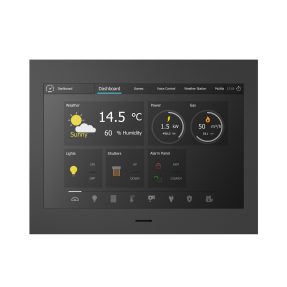
It is a central component of intelligent measurement systems that collects, encrypts and transmits consumption data in real time. Access to system data occurs via a platform that can be accessed using the dedicated smartphone and tablet app.
Smart keypads and switches
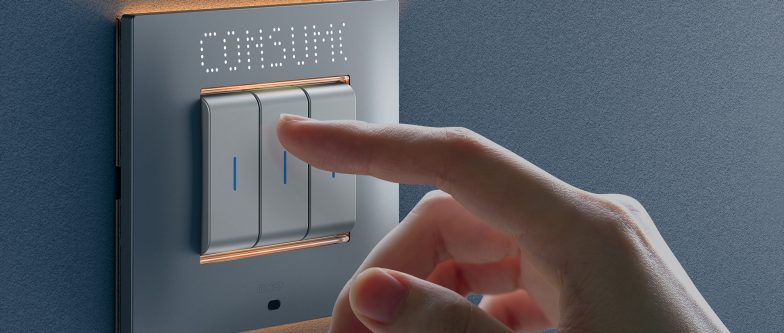
The manual control of functions remains a cornerstone of the user experience. For this reason, smart switches have been designed to complement the aesthetics of traditional switch ranges with advanced electronic capabilities.
A smart switch with Wi-Fi or ZigBee protocol allows you to centralise switching off lights or activating scenarios at certain times of day, or other devices, such as the entertainment system. These devices also help to reduce electricity wastage through scheduled programming and monitoring of connected loads, making the management of appliances more informed and efficient.
Finally, thanks to harvesting technology, a smart keypad can be installed anywhere in the home, eliminating the need for mounting boxes and batteries that need replacing, simplifying the creation and customisation of new control points.
Smart thermostats for heating management
Smart thermostats enable remote control of heating via an app, adjusting the temperature based on location or weather conditions, and they adapt to a wide range of aesthetic and functional needs thanks to a sleek, versatile design.
Installing a smart Wi-Fi or ZigBee thermostat enables several advanced features:
- Multi-zone management, for the set up of different temperatures in each room when combined with connected thermostatic valves;
- Energy reporting, for access to detailed data on switch-on times and consumption, for more informed home management.
- Predictive logic for regulating the heating based on the actual presence of occupants, using motion sensors or smart presence sensors.
The app wizard, which shows the user how to configure the smart thermostat, makes it easy to pair the device with the gateway to programme weekly schedules and allow interconnection with other devices, creating truly advanced scenarios.
Smart actuators for automating lights and shutters
Even converting existing electric shutters or lighting fixtures into smart devices does not require any invasive building work, thanks to the installation of specific modules known as actuators. Concealed smart actuators receive the wireless signal and then act on the shutter motor or the lamp circuit.
Fitting a smart shutter actuator can automate the process of opening and closing based on daylight hours or weather conditions, protecting fixtures and optimising natural heat gain.
Intelligent shutter management also enables the creation of group scenarios to close all shutters simultaneously through centralised control and the remote monitoring of the status of the window and door frames, ensuring increased security when the home is unoccupied.
FAQ
A complete system includes a central gateway, thermostats for heating and cooling, light switches and shutter actuators. The devices must be compatible with widely adopted standards, such as ZigBee, to ensure stability.
The cost varies based on the number of light points and automations to integrate. However, Smart Home system compatibility allows you to proceed step by step, adding devices over time without the need for expensive building work.
The procedure involves connecting the Wi-Fi gateway to the router and pairing the individual devices via the official app, following the automatic recognition steps for ZigBee network nodes.
Trending Topics
Related articles




Show other categories


You can enter the Gewiss world by consulting the sites available for each country, differentiated by language, services, and catalogue offerings
Choose your country


Check your country
You are browsing the International site but it seems that you are in {{country}}. Do you want to update your country?

Yes, go to the website for {{country}}

No, stay on the International site