
Energy saving and Smart Home: how to cut consumption
The transition towards a more efficient home requires conscious resource management and a reduction of domestic wastage, both objectives supported by Smart Home systems, which enable intelligent control of electrical loads and indoor climate, optimising energy consumption and fostering a greater awareness of resource use, with a potential benefit of lower energy bills.
Average household electricity consumption
Consumption in a typical household is marked by clear differences in the various uses of energy, with heating taking up the largest share.
A breakdown of consumption
Winter heating systems account for the largest overall share, while production of domestic hot water for the kitchen and personal hygiene requires a lower yet constant proportion. A similar percentage is consumed for the operation of cooking and built-in appliances. Lastly, room lighting and summer air-conditioning take up a residual portion of total energy expenditure.
Why heating accounts for more than everything else
Unlike individual electrical appliances that supply power in confined areas, heating systems must compensate for temperature variations across a large volume of air and surfaces throughout the building.
Other factors that make heating a large part of the energy demand include:
- continuous transmission of heat to the outside via uninsulated walls, floors, and windows, which forces the generator to work constantly to maintain the set-point;
- prolonged operation of heating systems, which remain operational for many consecutive hours throughout the cold season, unlike other devices.
How energy saving in a Smart Home functions
Adopting an electrical system for the Smart Home allows you to coordinate the technological subsystems of the home via a centralised logic.
Interconnected Smart Home products, also manageable by mobile devices, allow the system to automatically adapt energy consumption to weather conditions, occupant presence, and hourly grid rates.
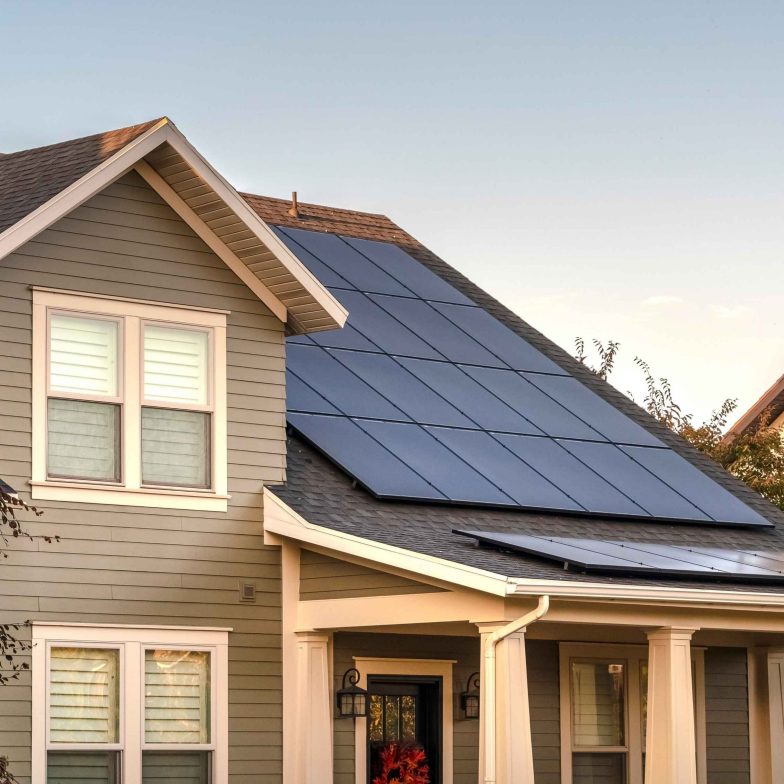
Furthermore, the integration of automations based on self-consumption from photovoltaic systems and smart monitoring of electricity consumption maximises overall efficiency, avoiding use of unnecessary power during peak times.
Why the Smart Home is an efficient solution
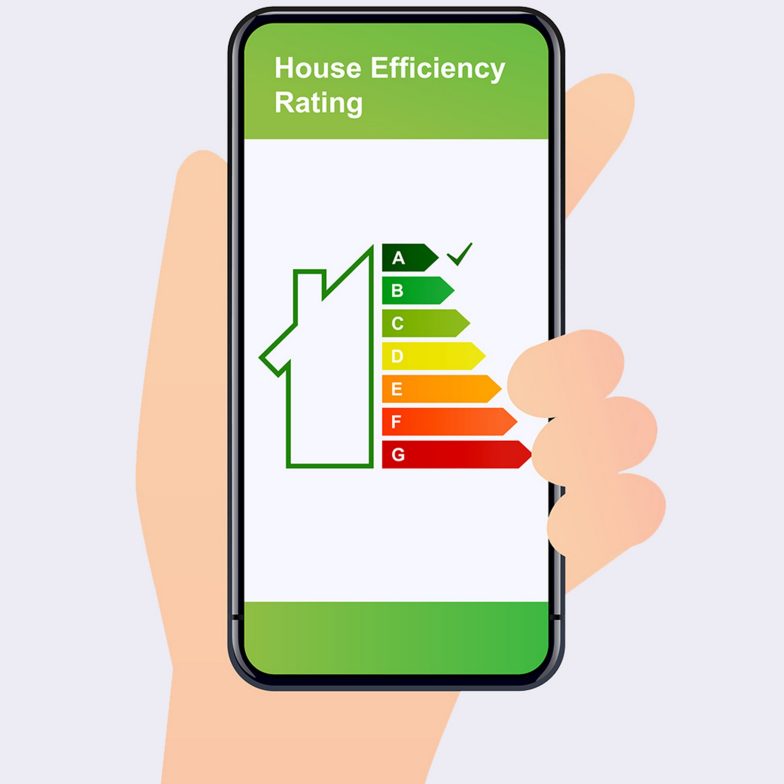
The transition towards advanced housing models is driven primarily by a steady reduction in operating costs and through the energy retrofitting of buildings, which make smart systems essential for eliminating the inefficiencies of traditional systems.
The various advantages provided by the Smart Home include energy management and living comfort. For example, the automated activation of shutters or blinds limits or allows solar warmth, reducing the need for cooling or heating, while remote adjustment ensures temperature optimisation during prolonged absences.
This approach, focused on resource efficiency and in line with European decarbonisation directives, supports a significant reduction in consumption and, consequently, energy costs, generating long-term economic benefits.
The three pillars of saving: behaviour, optimisation, monitoring
The reduction of energy expenditure is based on the interaction of three interlinked actions. The first is behaviour, with waste reduction achieved through actively switching off standby loads, careful thermostat regulation, and the use of appliances at full load during the most economically favourable time bands.
The second pillar focuses on optimisation, i.e. actions such as replacing light fixtures with high-efficiency LEDs, insulating window frames to limit heat loss, and periodic maintenance of boilers and air conditioners.
The third pillar is the constant monitoring of consumption parameters, another aspect that can be achieved with great precision, again thanks to the dedicated Smart Home solutions. The continuous analysis of data makes timely identification of any operational anomalies possible, identifying spending peaks, and comparing historical consumption profiles.
The integration of smart functions and constant monitoring does not, however, require sacrificing the interior design, thanks to the refined aesthetic of the plates, that integrate seamlessly with any interior style.
Smart heating: the real driver of savings at home
Managing heating within a smart system is the most effective way to optimise energy costs. Integration with advanced temperature control systems converts a traditional system into a high-performance structure, with various operational features:
- detailed programming of daily and weekly operating intervals;
- independent regulation of every single room via connected thermostatic valves;
- activation based on the actual presence of people in the building;
- dynamic regulation based on the weather;
- remote monitoring of anomalies and the operating status of the system.
Smart thermostat and programmed schedule
A Smart Home thermostat allows you to overcome the rigidity of traditional programmable thermostats, as the user can divide the day into customised time slots which can be associated with specific temperature set-points or operating modes, such as ‘comfort’ and ‘economy’.
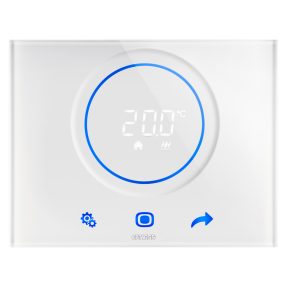
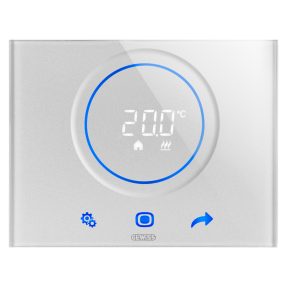
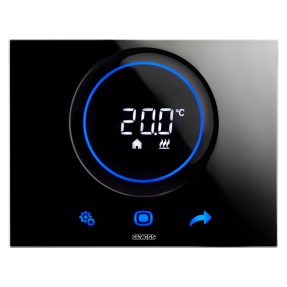
Remote thermostat control also contributes to energy savings, for example via the GEWISS Thermo ICE 2.0 app, which helps you to reduce waste and ensures you always have a clear and comprehensive overview of consumption.
How to adjust the heating thermostat efficiently
To optimise performance without compromising comfort, it is necessary to maintain a constant temperature and avoid continually adjusting the settings manually, to prevent consumption spikes and abnormal generator use. Furthermore, it is advisable:
- to define time slots calibrated to the actual times the home is occupied;
- reduce peaks by avoiding raising the temperature to the maximum, aimed at heating the room faster
Minimum and maximum temperature to programme by season
The balance between living comfort and cost containment requires the correct setting of set points for each season. The minimum and maximum thermostat temperature values can be further optimised, based on the use of the rooms, with some recommended temperatures.
In Winter, it is appropriate to maintain a temperature between 19 and 20°C in the living area and between 16°C and 18°C in the bedrooms. In summer, it is recommended to set air conditioners to 25°C-26°C with dehumidification active and use passive shading to block solar radiation. Understanding the correct temperature at which to set the thermostat avoids overloading the air-conditioning system and significantly reduces the energy cost on the bill.
What temperature shouldthe thermostat be set at in winter
To ensure the energy efficiency of Smart Home systems, the general rule is to maintain the living area at 19-20°C during hours of occupancy. During nighttime hours or in case of absence, the temperature should not drop below 16-17°C to avoid excessive cooling of the walls.
Just like for an old “traditional” thermostat, raising it by just one degree above the recommended threshold results in an increase in consumption of between 7% and 10%. Consequently, careful evaluation of the best thermostat settings to save money also means optimising heat delivery.
It is also important, during installation, to check that the position and height of the thermostat are correct, it should be at about 1.5 meters from the floor to avoid inaccurate readings and placed in a room with an average temperature, i.e. not the hottest or coldest in the home.
FAQ
To create an infrastructure focused on energy savings in Smart Home systems, the basic components include a smart thermostat, connected thermostatic valves for multi-zone management, smart plugs for load monitoring, and a control panel for centralising commands.
The integration of home automation systems for indoor climate and lighting management can result in an estimated reduction in overall energy consumption of between 30% and 35%. The greatest savings can be achieved on the heating share, thanks to hourly regulation and remote control.
This category includes thermal insulation of the building shell, replacement of old generators with heat pumps or condensing boilers, installation of photovoltaic systems, and integration of systems for smart control of building systems.
Trending Topics
Related articles



Show other categories


You can enter the Gewiss world by consulting the sites available for each country, differentiated by language, services, and catalogue offerings
Choose your country


Check your country
You are browsing the International site but it seems that you are in {{country}}. Do you want to update your country?

Yes, go to the website for {{country}}

No, stay on the International site